Astronomy
Astronomy's next great discovery may be found not by telescope, but instead with little more than a laptop computer, an Internet connection and a learned and persistent amateur. In fact, astronomers are already pulling new findings from old data, the start of what some say is a looming change in how science gets done.
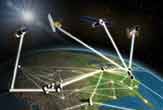
Called virtual astronomy, the research technique is a break from using telescopes and other instruments for direct observational data gathering.
Instead, scientists will pore over a mounting bounty of new and old data collected by the Hubble Space Telescope, the European Southern Observatory and others telescopes.
"Weve become so advanced [technologically] that were now dealing with a data avalanche from our observations," said Joseph C. Jacob, who works on the Digital Sky Project, a joint venture by the California Institute of Technology and NASAs Jet Propulsion Laboratory to connect four astronomical databases through one Internet web portal.
The amount of dusty data is remarkable.
Hubble alone collects about a terabyte of information each year, roughly the equivalent about 231 million pages of typed text. Some telescopes under development are expected to pump out that much data in a day. And in most cases, researchers said, far more data is collected than needed at the time. The observations are later revisited by different scientists, sometimes up to two or three times, for use in new studies.
Current efforts to mine the archives are mostly manual and require that each research group adjust the data to fit their format, said Robert Hanisch, a senior scientist at the Space Telescope Science Institute, which manages Hubble.
"It [virtual astronomy] makes practical what people now try to do manually by taking care of a lot of the bookkeeping," said Hanisch, who is also project manager of a U.S.-based effort to establish a national virtual observatory.
Discoveries already
In the last few years, a number of "virtual observatories," as they are called, have sprung up to tap into these reams of data.
The Germany-based Astrophysical Virtual Observatory and Astrovirtel programs, managed by the European Southern Observatory, are two examples.
In August, European scientists announced that their use of Astrovirtel led to a readjustment in the size of the space rock 2001 KX76, a distant object located outside the orbit of Pluto in a region known as the Kuiper Belt. The use of virtual astronomy, researchers said, allowed investigators to study the rock's orbit over a longer period of time, and calculate a new diameter of 745 miles (1,200 km) or more.
The United Kingdoms Astrogrid project, which began last fall, is aimed at developing the computing infrastructure necessary for the massive amounts of data to be collected by research installations in upcoming years, and virtual observatory efforts are underway in Australia as well.
Last month, the National Science Foundation awarded a five-year $10 million grant for the development of a U.S. National Virtual Observatory, of which Hanisch is project manager. It will involve a coalition of 17 research organizations.